

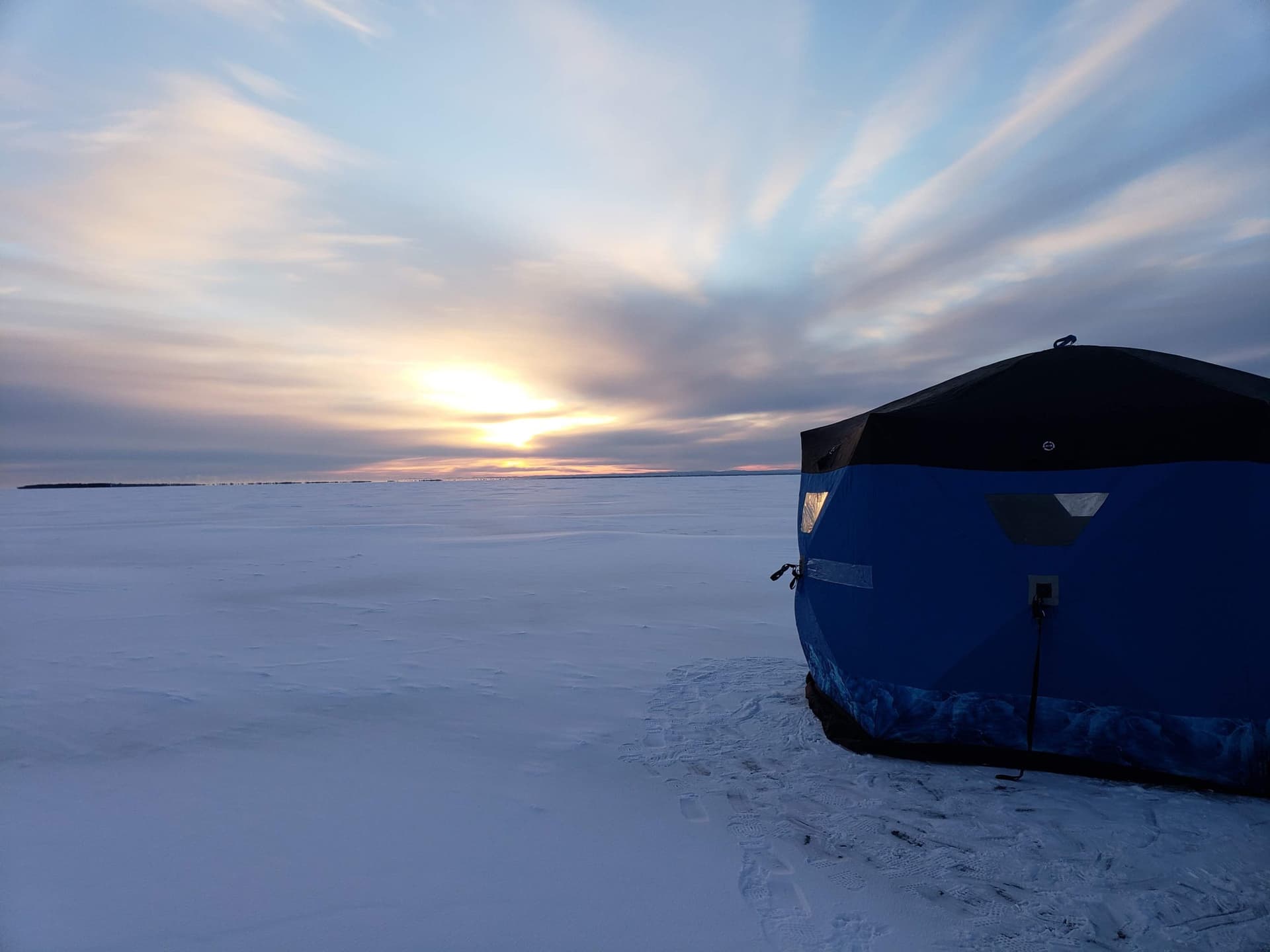
Source: Meteorologist Brittney Merlot
Thin ice on lakes, after warmer winter weather
When walking on thin ice, tread lightly. Here are other tips and tricks for determining ice walking — and what happens if you fall through.

Jan 14, 2026, 2:54 PM CT


Share
BAYFIELD, Wis. (CIVIC MEDIA) – When walking on thin ice, tread lightly. Lakes are seeing thinner ice after a warmer winter.
Temperatures spiked to nearly 60 degrees in Milwaukee last Friday, and southern parts of the state reached the mid 50s yesterday. Even parts of Minneapolis were in the low 40s this week.
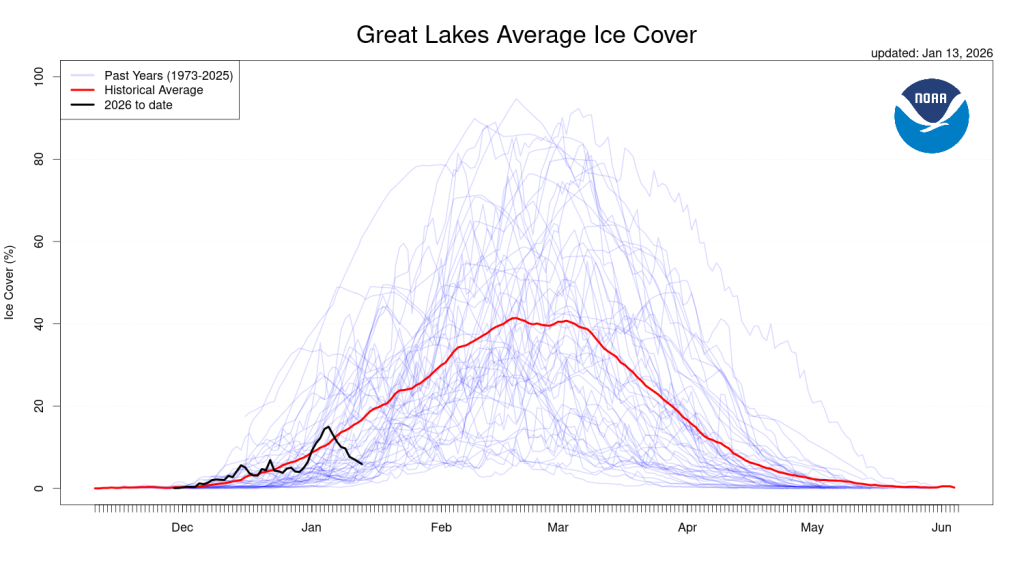
At a time when the lakes should be thickening their ice up, they are doing the opposite and thinning. Great Lakes ice coverage is well below average, dropping from nearly 15% coverage down to 5% in one week.
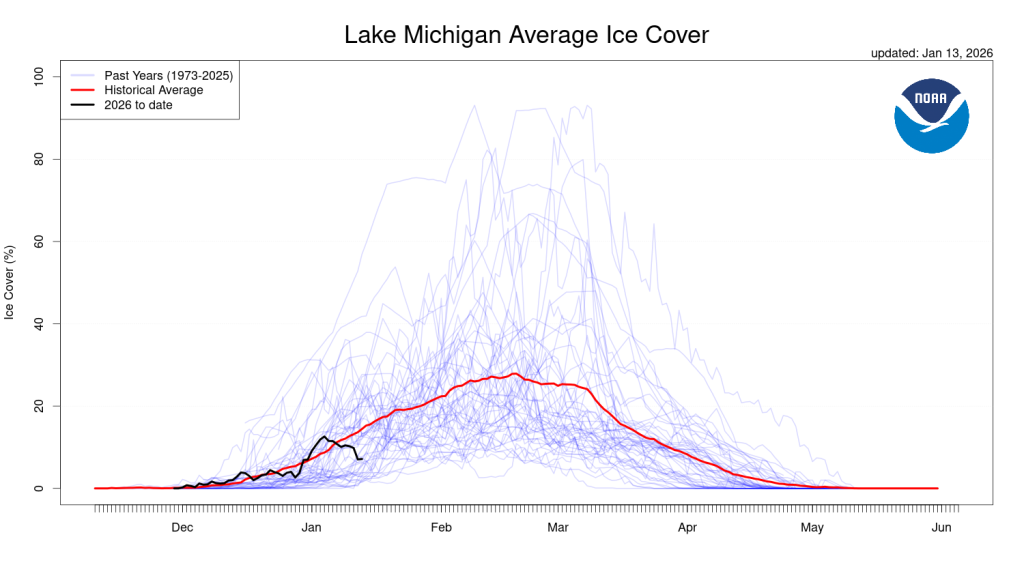
Lake Michigan was over 11% ice and now its dropped down to just 7%.
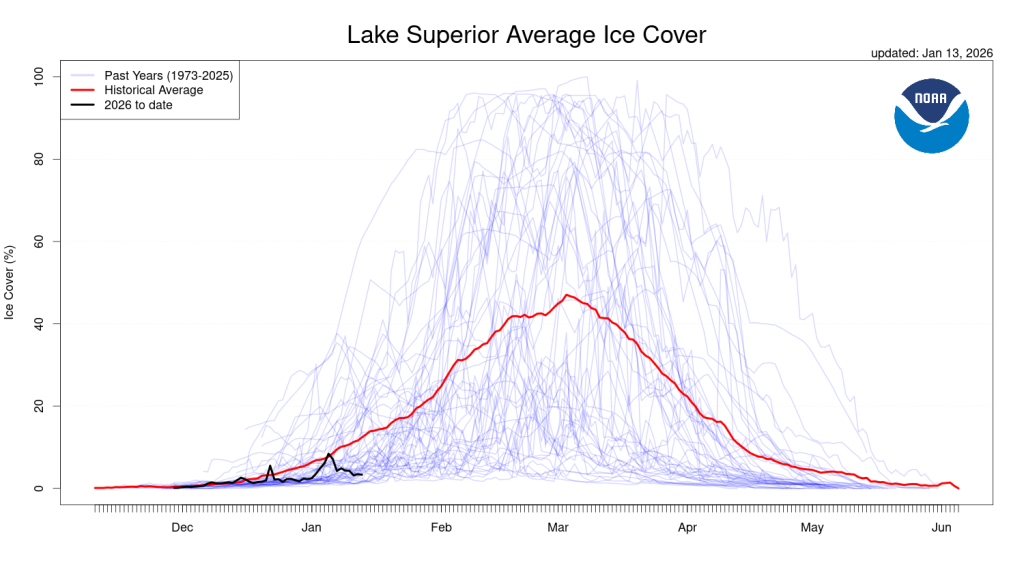
Lake Superior the coldest of them all, has merely 3% covered. It melted 6% of its ice in just 8 days.
Inland lakes are having the same problem, thinning ice and slushy open waters are revealing themselves, even on Lake Winnebago.
Don’t judge ice by how it looks
No ice is completely safe ice. You can’t tell how thick or safe it is just by looking at it. The strength of ice is based on multiple factors, which change from lake to lake. Thickness can also vary within one lake itself.
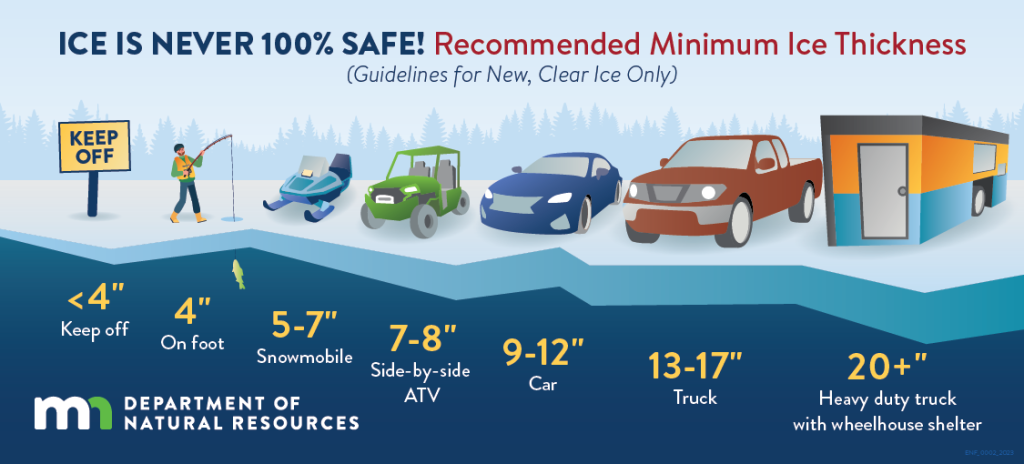
Ask local fishing clubs, bait shops, and even resorts for information on how thick the ice is and where dangerous areas may be. They know it best.
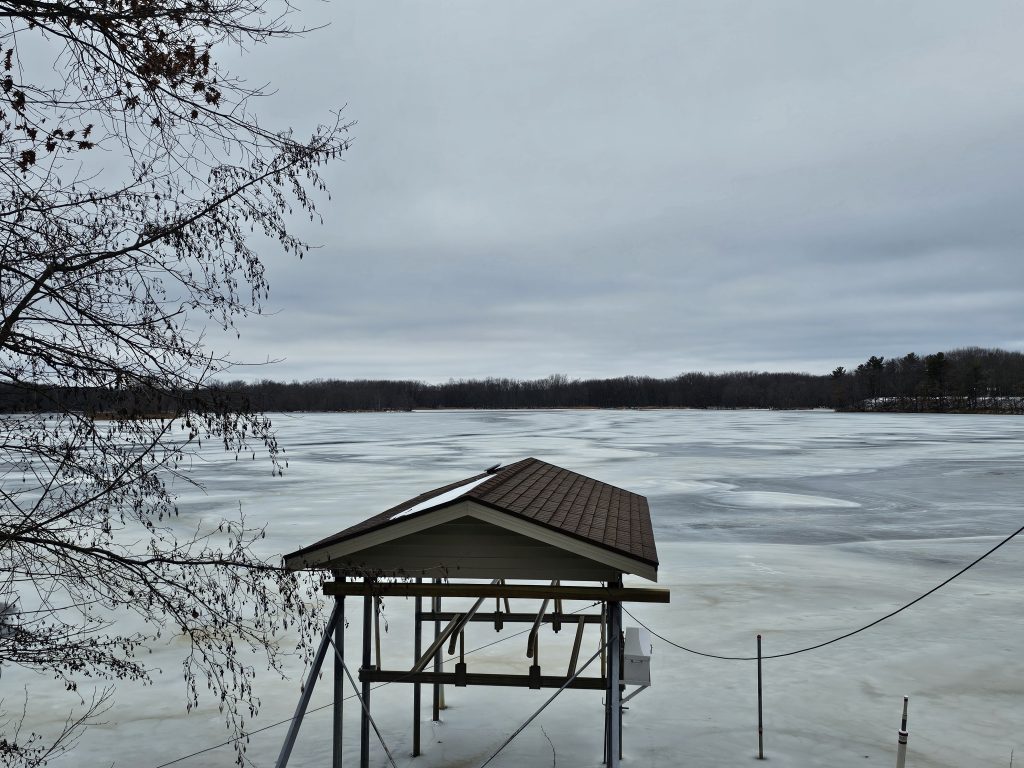
Other tips for determining whether ice is safe to walk on:
- Clear ice is thicker than snow covered, milky or bubbly looking ice.
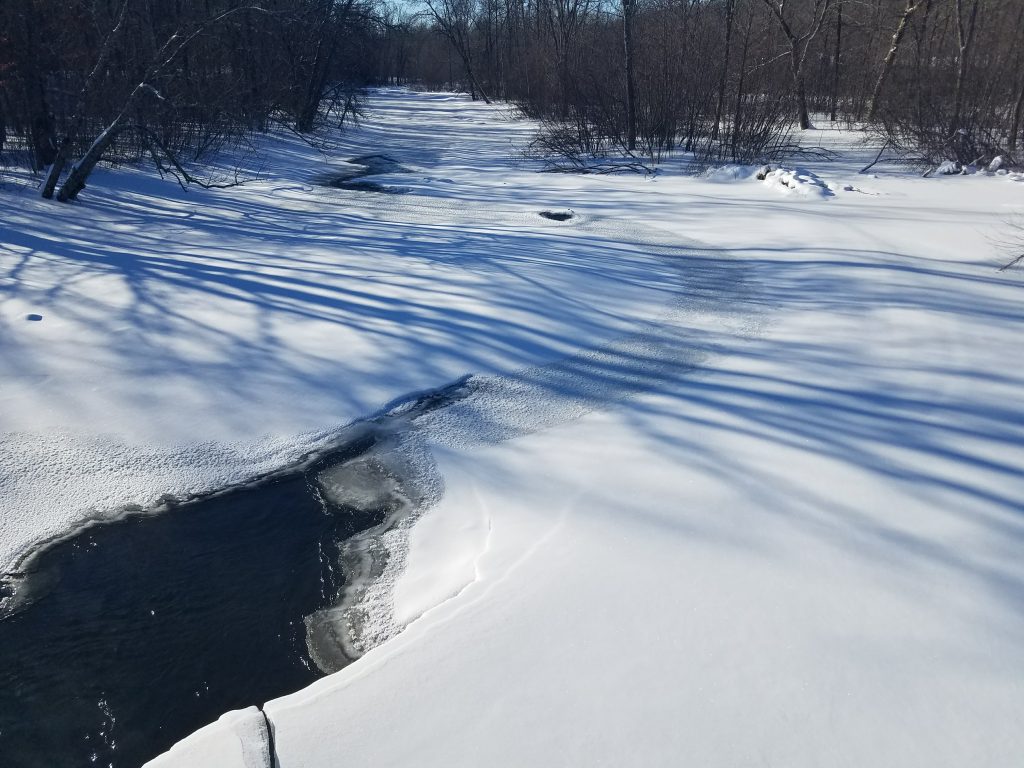
- Avoid inlets, outlets or narrows that have currents underneath, thinning the ice.
- Bring a cellphone and ice picks with you. A life jacket and a rope is also a good idea to have nearby.
If you break through
If you fall into the water, immediately get your hands up on the unbroken ice.
Use the picks to dig in and kick your feet and wiggle yourself up. Once you are out, don’t stand up. Instead, lay flat to distribute your weight and slowly squirm away. Then, get to a sheltered area immediately to warm up.
Windy days are dangerous
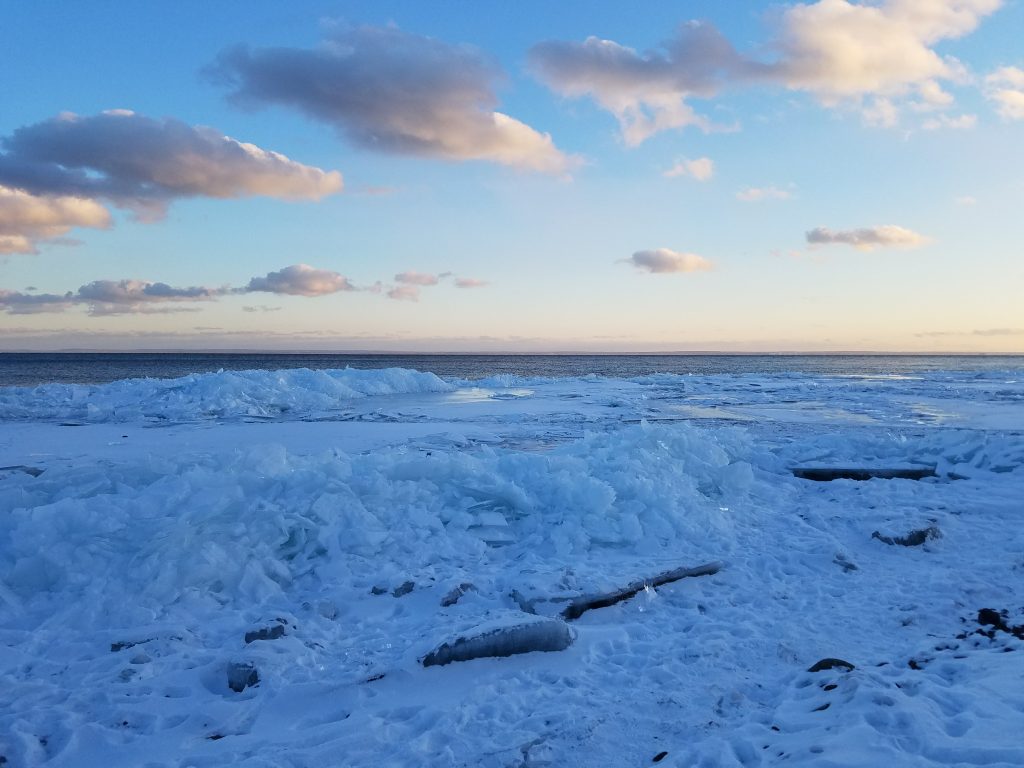
Keep in mind that windy days also move and shift ice sheets around. This causes heaves that are weaker. Gusty days also could rip the ice away from shore, causing you to drift into open water, needing to be rescued from the Coast Guard.
“We have an ice rig and an airboat ready to go. [It] usually takes us about 10 minutes to get on the road, then drive to the location and begin the rescue,” says Sturgeon Bay Coast Guard BM3 Evan Peffley.
“If it’s a short distance from shore we get out of the truck and save you immediately. If it’s more than 1,000 yards offshore we quickly launch the airboat,” says Peffley.
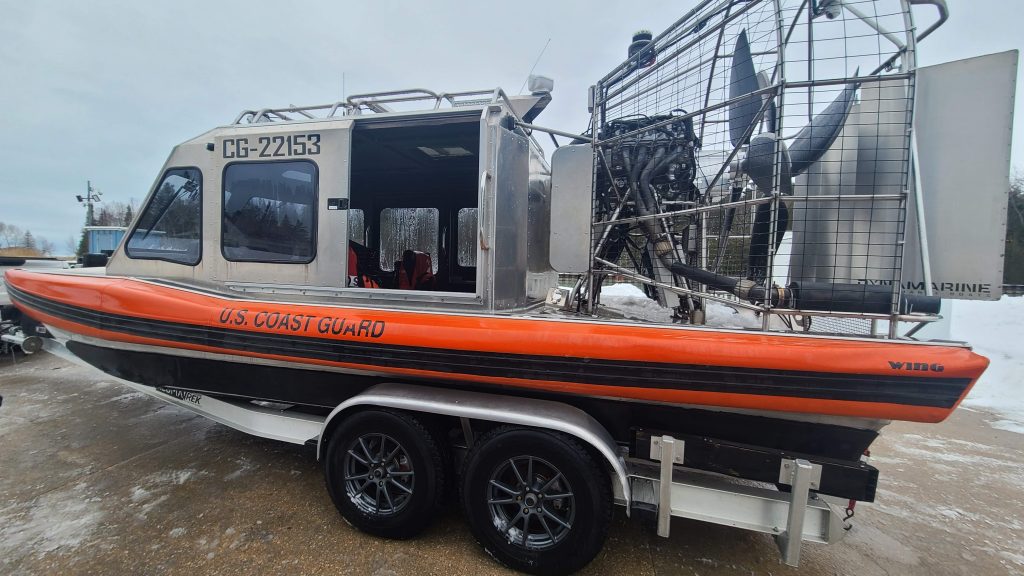
The 1-10-1 rule is what the Coast Guard goes by for survival times.
“You have one minute to catch your breath before you hyperventilate. 10 minutes of meaningful movement, afterwards moving fingers, toes and limbs becomes a struggle. Then one hour until you could lose your life,” says Peffley.
Ice breaking underway
Ice breaking procedures continue to cut ice on Green Bay all the way up to the U.P. of Michigan, allowing ships to come through. This leaves open water for ice sheets to move.
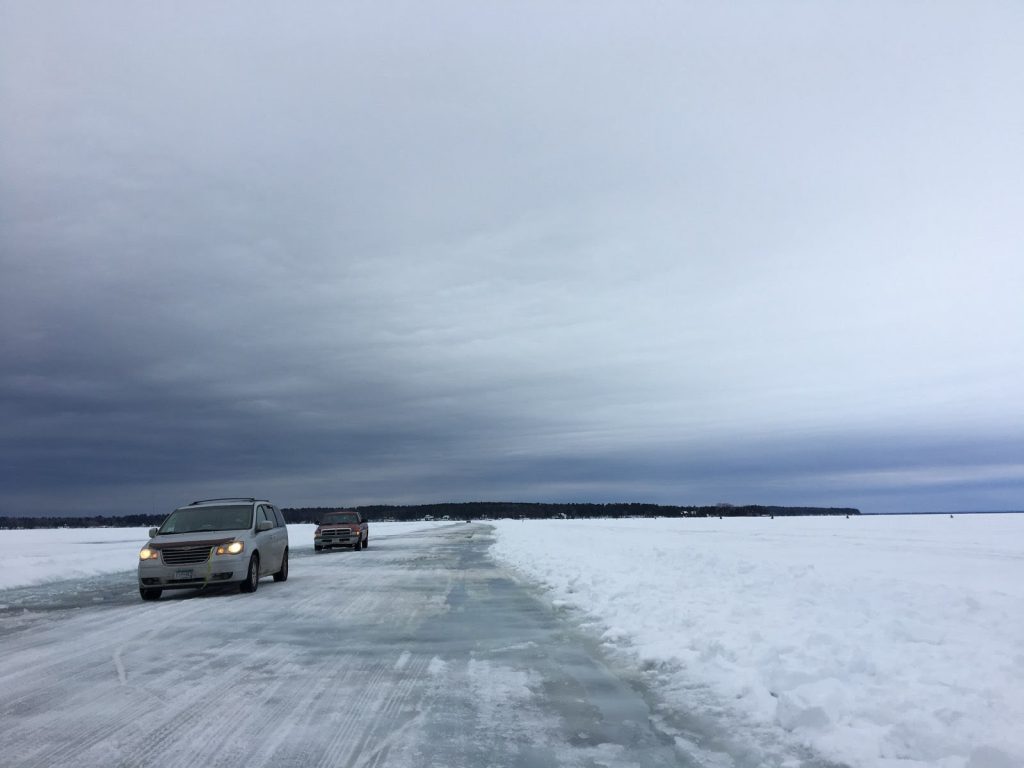
The lack of ice also has the Madeline Island Ice Road closed. It is very fragile in the winter, and a lifeline for those who live on the island all year. Currently, the Madeline Island Ferry Line is still running through open water.
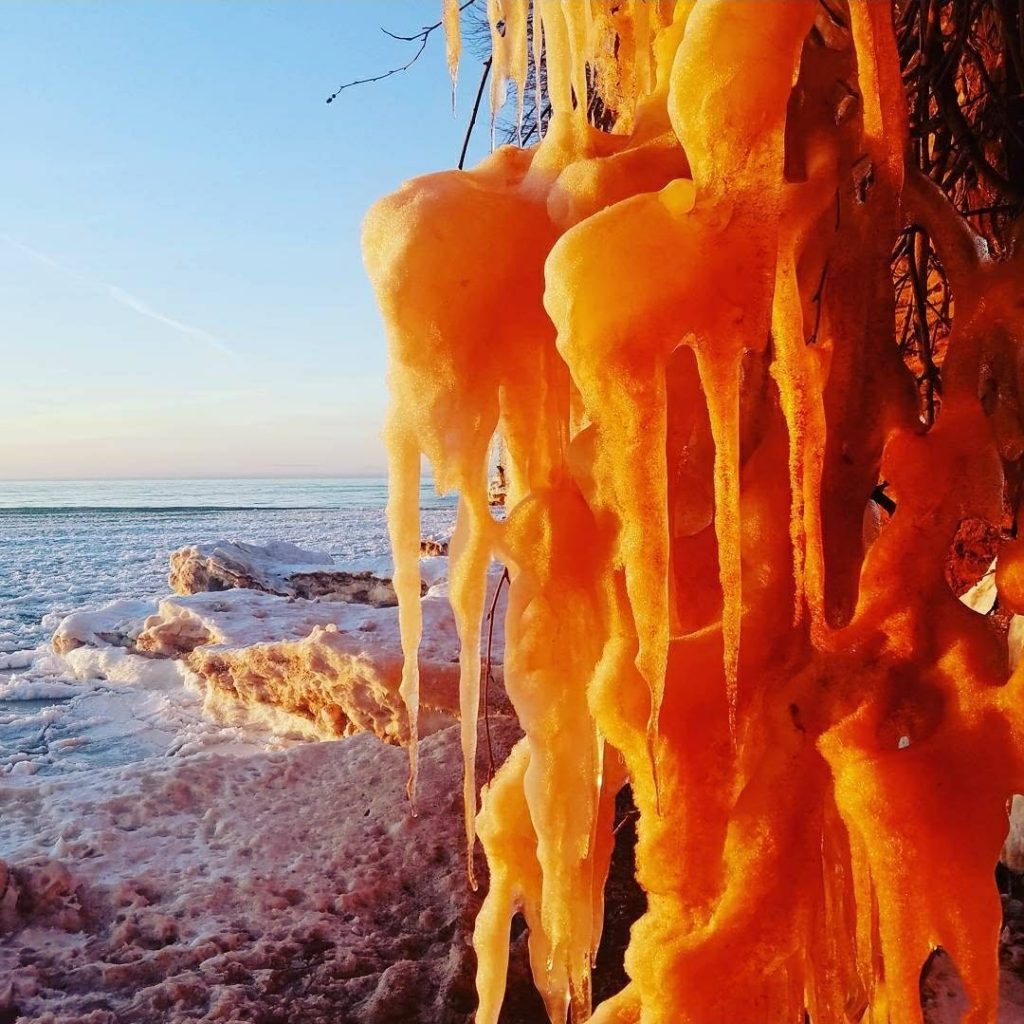
The Apostle Islands National Lakeshore – Ice Caves are also closed. They haven’t been safely accessible and open to the public since 2015, due to insufficient and unsafe ice conditions.
However, if you still want to see the sights, you can hike on the mainland trail above the caves and observe them from above.

Brittney Merlot is Civic Media’s Meteorologist. Email her at brittney.merlot@civicmedia.us.
Want More Local News?

Civic Media
Civic Media Inc.
The Civic Media App
Put us in your pocket.


